
The present village of Johnson Creek had its inception in 1838 when Timothy Johnson and Charles Goodhue made a claim upon land where the main part of the village is now located. They built a dam and sawmill along with a cabin on ground over which the current railroad now runs.
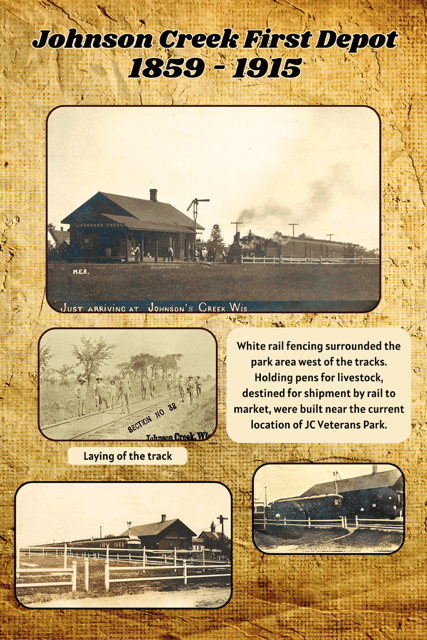
Four years later, in 1842, there were two houses in the village. The nearest post office was located in Aztalan, and provisions could be obtained no nearer than Janesville or Milwaukee. The first religious service was held in 1841 by Reverend Allen, a Methodist circuit rider, and 18 years later the first railroad went through the village marking a noticeable increase in the population.
The village was known as Belleville in honor of Charles Bell, who owned a good portion of the land upon which the village stood., thought it always bore its present name as the post office. On April 9, 1868, the name of Belleville was changed to Johnson’s Creek in honor of Timothy Johnson., that it was still referred to as Belleville in some sources as late as 1873. Sixty-five years later the village became incorporated and the name was changed from Johnson’s Creek to Johnson Creek, the apostrophe and letter “s” being omitted.

In March of 1903 eight men signed a petition requesting certain territory in the towns of Aztalan and Farmington be declared the incorporated village Johnson Creek:
- F. C. Mansfield
- W.A. Christians
- J.H. Scofield
- Jules Warnes
- Ed Kottke
- E.F. Flath
- H.O. Meyers
- T.J. Jax
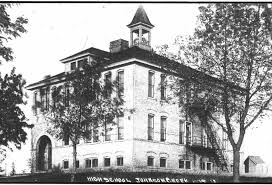
Johnson Creek’s school district found in 1848, before Wisconsin became a state in 1849. The district was known as District No. 8 of Farmington and Aztalan townships. The first school was a log structure located on Milwaukee Street. Later, a lot was purchased for $100.00 in 1854 and the school was built on it for $1,278.00. From the time the district was created it was operated by the townships, and in 1861 the laws were amended to create a county superintendent of schools. The school’s enrollment in 1886 was recorded as 25 students for all grades while teachers were paid $20.00 a month for three summer month and three winter months.
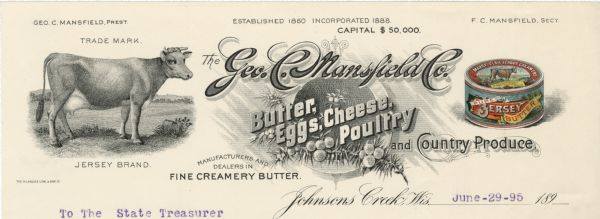
One of the leading residents of Johnson Creek was George C. Mansfield, who was a pioneer in the butter, milk and egg trade. He started a cheese factory in 1877 and later was the state’s leading butter producer. The Grell and Christians families also were instrumental in establishing the village as one of the larger markets in the state for butter, milk and eggs. In 1888 Mansfield started the Mansfield Bank, a commercial system necessary to the success of any village.
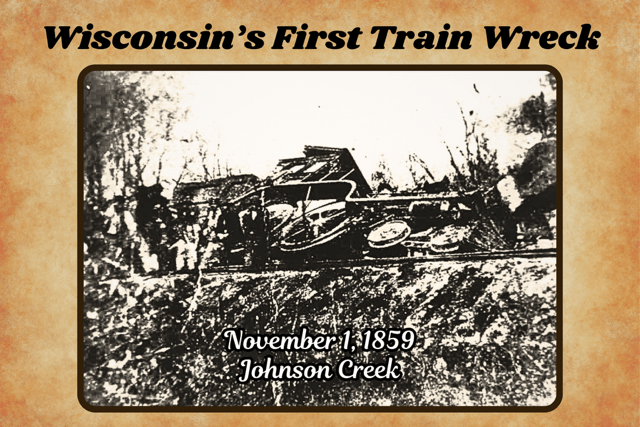
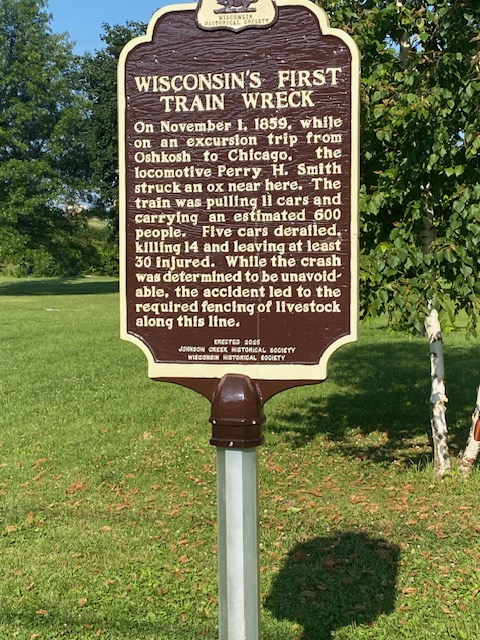
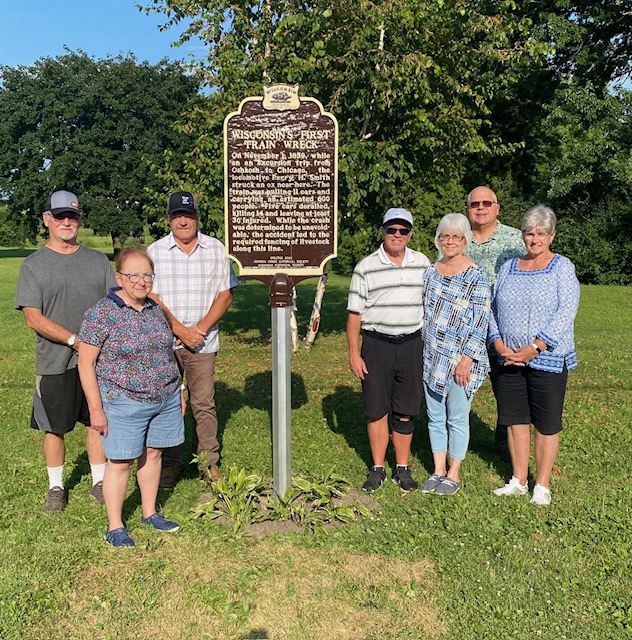
The railroad arrived in Johnson Creek in 1859 and with it came one of the saddest events in the area’s history. On November 1, 1859, an excursion train on its way to Chicago was traveling about 15 miles an hour when it struck a large ox, derailing the train and sending the engine and cars into a marshy area. The road had just been built and a local farmer hadn’t had time to build a fence to keep the animals off of the tracks; fourteen people were killed in the incident and at least thirty injured.
Another tragedy occurred on Saturday, December 26, 1891 when the business portion of Johnson Creek was wiped out by a disastrous fire. The fire was discovered in the basement of Steuber’s Saloon, with the fire’s origin still being a mystery. The Jefferson and Watertown fire departments had to be called to aid in putting out the fire.
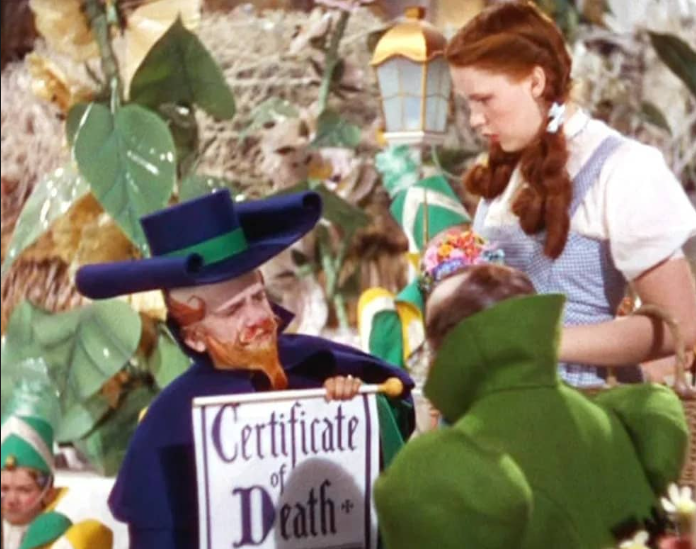
A local celebrity is Meinhardt Raabe, who graduated from Johnson Creek High School in 1932. He was employed by the Oscar Meyer Company to portray the character “Little Oscar” and is best known for his role as the Munchkin coroner in the 1939 film “The Wizard of Oz.”
Johnson Creek was well known for the dances held at the “Music Box” owned by W.A. Christians Jr., where popular dance bands of the day were booked, and people traveled from all over the area to eat and stay at the eclectic Gobbler Supper Club and Motel built by Clarence Hartwig.


Johnson Creek is now known as “The Crossroads with a Future,” with new homes and economic developments being built making the village the fastest-growing community in Jefferson County. Industries that have joined the community over the years include Johnson Creek Premium Outlets, Kohl’s Department Store, one of the largest Menard’s store in the state, and TREK’s Global Distribution Center.
 Johnson Creek Historical Society